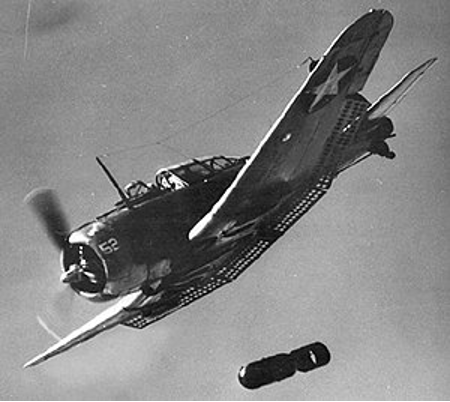

The A-24 Banshee in the Southwest Pacific – Disaster in Java Saturday, January 17. 2026
Doors Open at 9am Presentation Begins at 10am
In early 1941, Japan went to war with the U.S., Great Britain, The Netherlands and others to secure dominance over Southeast Asia and the oil rich regions of Malaya, Borneo, Sumatra and Java. After its initial attack on Hawaii, the Philippines and the British colonies on China’s coast, Japan turned its attention to striking Darwin on the north coast of Australia and invading the resource-rich island of Java in February 1942. The Battle for Java began with the Japanese invasion on February 28th, 1942, and ended with the defeat and surrender of Allied forces on March 12th, 1942.
The meager forces the Allies could muster could not hold off the Japanese onslaught. Allied air defenses included U.S., Dutch, and Australian air forces, but the overwhelming Japanese air contingent easily gained the upper hand. The sea battle resulted in the loss of two cruisers and 2,300 Allied sailors. Also lost was the USS Langley, the Navy’s first dedicated aircraft carrier.
Java was an early indicator of the importance of air power in land, sea and amphibious campaigns. The Allied side included a patchwork fleet of Brewster Buffalos, P-40 Warhawks, early model B-17 Flying Fortresses, Lockheed Hudsons, Hawker Hurricanes, Bristol Blenheims, early B-24 Liberators, and A-24 Banshees. Japanese air forces outclassed and outnumbered the Allies with its highly effective Aichi D3A “Val” dive bombers, and fighters like the Nakajima Ki-43 Hayabusa “Oscar” and early models of the Kawasaki Ki-61 Tony.
In the Battle for Java, the Allies quickly learned that many of its aircraft and tactics were outdated and ineffective. The A-24 Banshee, which was the Army Air Forces version of the Douglas SBD dive bomber, was just such an example. Despite the heroic efforts of the 27th Bomb Group, its A-24s proved unable to significantly influence the battle. This marked the beginning of the end for dive bombers in the Army Air Forces.
On Saturday, January 17th, 2026, at 10:00 am, Museum Lead Docent and retired Army Colonel Nick Cressy will cover the entire story of the A-24 Banshee and its role in the battle for Java, and how it came to be the last of the Army’s purpose-built dive bombers.